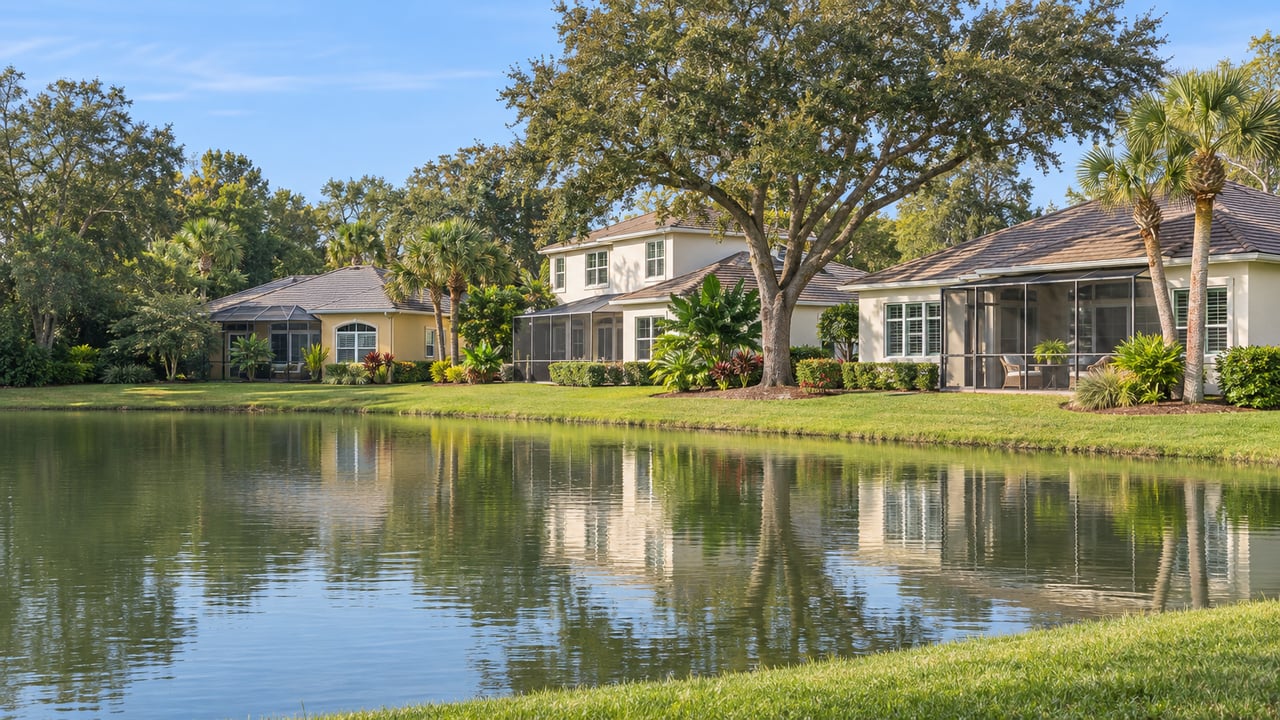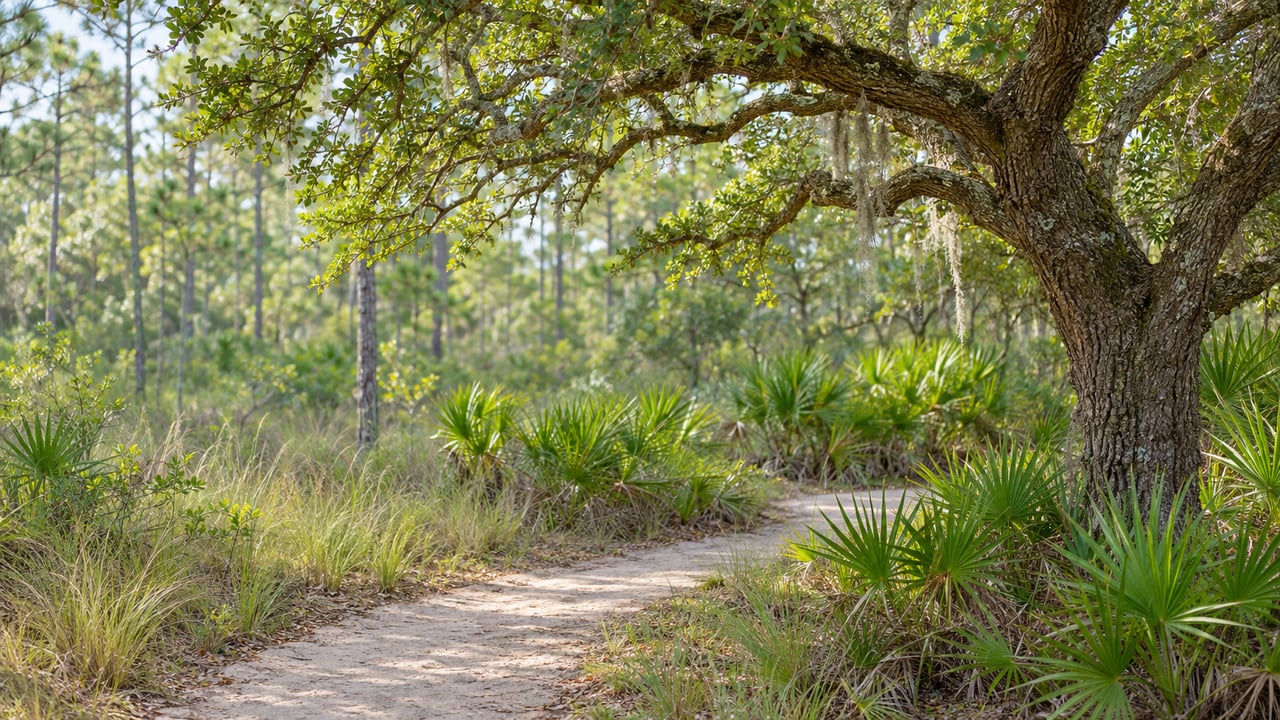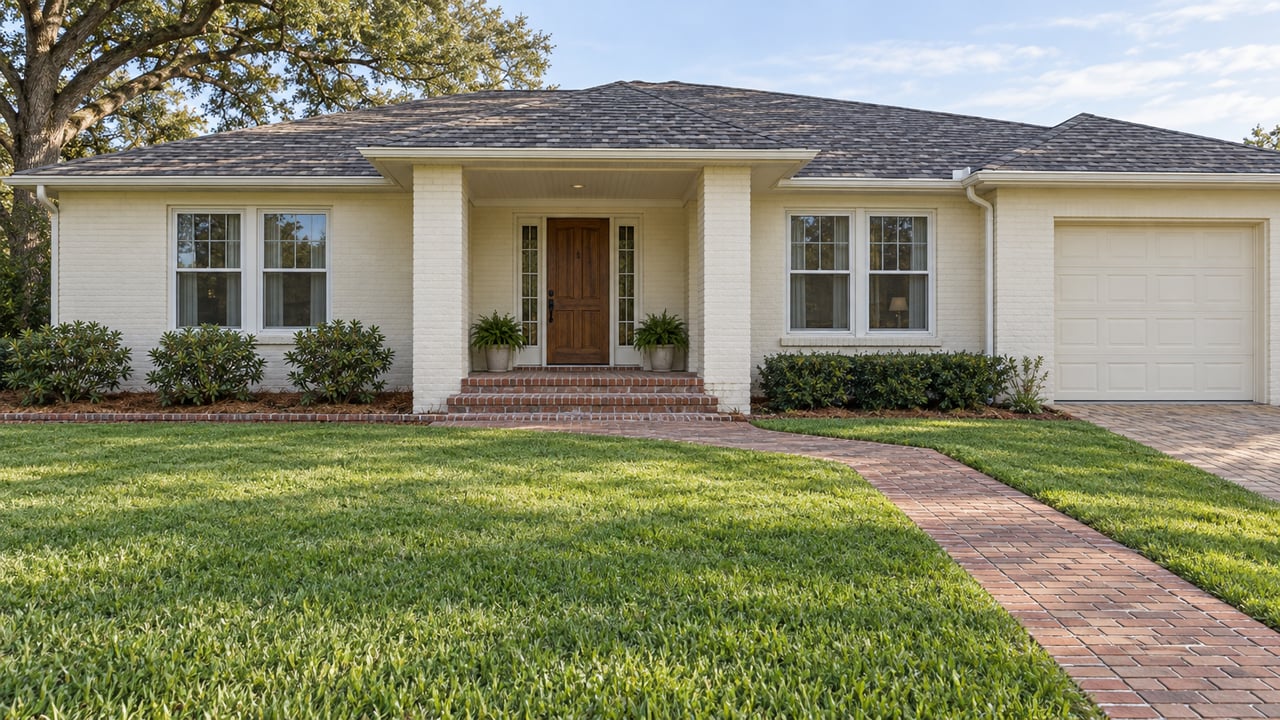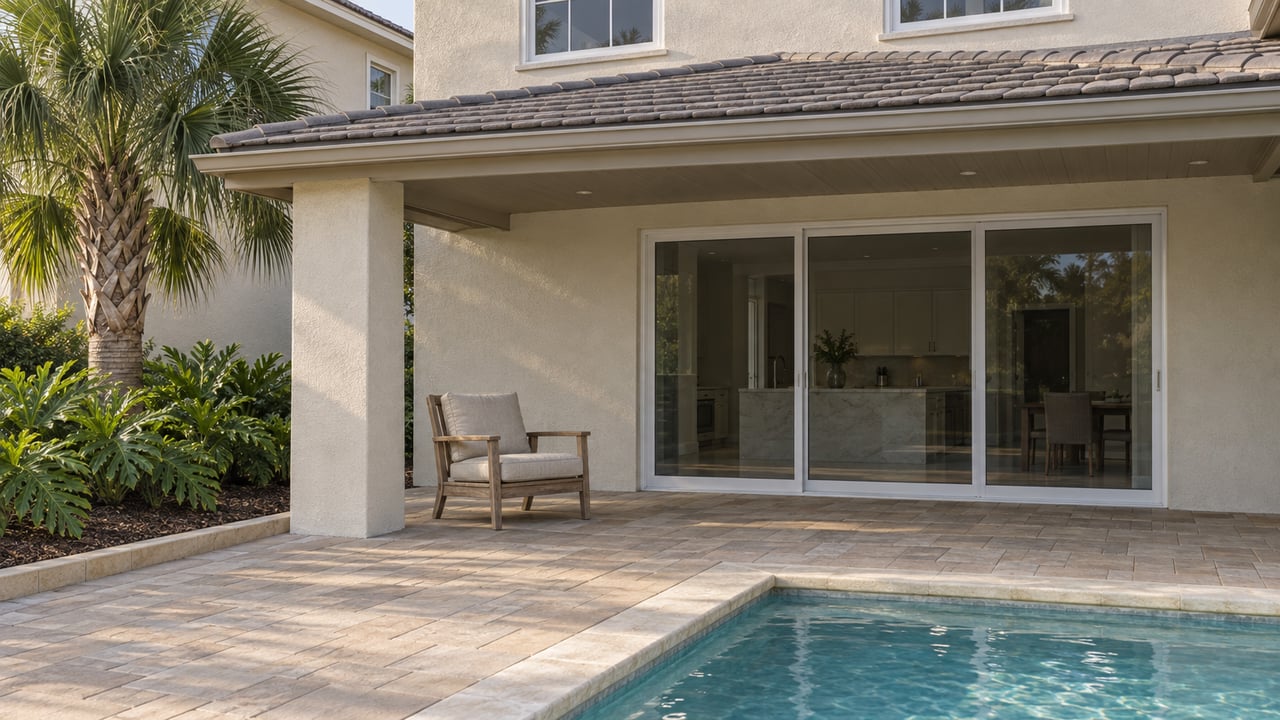
Two showings, same Saturday, listed four thousand dollars apart. The first is a bungalow a few blocks off Church Avenue, inside Dade City's historic core, walking distance to the courthouse and the shops downtown. The second sits on a couple of acres out past the Pioneer Florida Museum, long driveway, room for a garden, quiet in a way the in-town listing never will be. On paper, their prices are close. In practice, a buyer who treats them as interchangeable is about to learn the hard way that Dade City's listings aren't selling one product. They're selling two, and the price tag doesn't say which one you're getting.
The median that isn't one number
Pull up three different sources for Dade City home prices right now and you'll get three different answers, and none of them are wrong. As of June 2026, one market tracker puts the broader Dade City area's median sale price at $334,900, with homes moving in a median of 83 days, faster than the 90-day pace from a year earlier, on 689 recorded sales. Redfin's numbers for the three months ending May 2026 show a median of $329,000, down 12.8 percent year over year, even as days on market dropped from 96 to 63 over the same stretch. Meanwhile, a narrower look at parcels inside the actual city limits, the historic core itself, puts the trailing 12-month median closer to $290,000 as of early August 2026, on homes with a median year built of 1960.
That's not noise. Prices falling while homes sell faster, and a citywide figure running well above the in-town figure, both point to the same thing: Dade City's housing stock isn't one market, it's at least two stitched together under one zip code. The historic core is old, small, and on municipal utilities. The land around it is newer construction and acreage, on private wells and septic systems, sometimes tucked into planned communities like Lake Jovita Golf & Country Club, Abbey Glen, or West Hill Estates. Blend those together into a single median and you get a number that describes neither one accurately.
| Historic core (in-town) | Surrounding acreage / new construction | |
|---|---|---|
| Typical age | Median year built 1960; some homes date to the early 1900s | Newer builds and country-style lots developed more recently |
| Water and sewer | Connected to city water and wastewater service | Private well and septic system |
| Common due diligence | Wiring, plumbing, and foundation age | Septic tank condition, drain field, well output |
| Typical repair flags | Knob-and-tube wiring, galvanized plumbing, foundation settlement | Septic pumping schedule, drain field performance |
What a 1960 home in town is really selling you
Buy inside the historic core and you're buying city water and sewer, which means one less system to inspect and finance around. What you're buying instead is age. Local contractors who work Dade City's historic renovations point to the same recurring issues in homes from the early 1900s: foundation settlement, floors that need releveling, knob-and-tube wiring that hasn't been touched since it was installed, and galvanized plumbing that's well past its intended service life. None of that shows up in a listing photo. It shows up in a home inspection, and sometimes not until an insurance underwriter asks for a four-point inspection before binding a policy.
The city itself keeps a public register of the homes and sites it considers historically significant, from Church Avenue properties to the old Pasco County Courthouse grounds, and it's worth a look before you fall for a listing based on curb appeal alone. A charming exterior on a 1920s foundation is a different purchase than the same charm on a foundation poured in 2015, even if the asking price looks identical.
What the acreage out past the museum is really selling you
Step outside the city limits and the systems flip. Rural Dade City properties, the kind with room for a barn or a real garden, generally aren't on municipal water or sewer at all. They run on private wells and septic systems, and that changes the entire due diligence checklist.
A standard septic inspection in the area runs $250 to $500 and checks tank condition, sludge levels, and how well the drain field is performing. In practice, buyers and lenders in Dade City commonly ask for one because nobody wants to find out about a failing drain field after closing. Septic Companies Near Me says routine pumping typically doesn't need a permit, but repairs, replacements, and new installations almost always do, with permit fees generally running $100 to $400. As for the pumping itself, expect $275 to $550 depending on tank size, most local systems run 1,000 to 1,500 gallons, plus another $50 to $150 if the lid has to be dug up. A family of four on a 1,000-gallon tank typically needs pumping every three years. A couple on the same tank can often stretch that to five.
Central Florida's rainy season adds one more wrinkle worth knowing before you buy: heavy summer storms and hurricane-season flooding can overwhelm a septic system, and a flooded tank shouldn't be pumped until the groundwater around it recedes, since the empty tank can float. That's a maintenance calendar, not a red flag, but it's a maintenance calendar a city-water buyer never has to think about.
The city is already pricing in the growth
New construction on the outskirts carries its own cost layer that resale homes in the historic core simply don't. Back in 2021, Dade City moved to raise its public safety impact fee on new single-family construction from $94.49 to $449.30, a 376 percent jump, after the city's own consulting study described the existing fee schedule as outdated and unchanged since 2004. The increase was tied directly to growth: officials said the police department would need dozens of additional officers to keep pace with new development, and impact fees on new construction were the mechanism to fund it.
That episode is a few years old now, and current fee schedules should always be confirmed with the city before writing an offer on new construction. But it's a useful data point regardless of the exact number today, because it shows something structural: Dade City has been actively recalibrating what new development costs to build, while resale homes in the historic core aren't subject to that same recalculation. Comparing a new build on acreage to a 1960s resale isn't just a comparison of two houses. It's a comparison of two different cost structures layered underneath them.
Reading a Dade City listing correctly
Before you compare two listings on price per square foot alone, run through these questions:
- Is the home on city water and sewer, or on a private well and septic system?
- If it's on septic, when was it last pumped, and has the drain field been inspected recently?
- If it's in the historic core, has the wiring and plumbing been updated since the home was built, and what does a four-point inspection say about insurability?
- If it's new construction, what impact fees and permit costs are baked into that price, and are they current as of your closing date?
None of these questions will show up in a portal search filter. All of them change what a given price actually means.
A few questions worth asking first
Do buyers and lenders in the Dade City area commonly request a septic inspection? In practice, buyers and lenders in the Dade City area commonly request a septic inspection, simply because nobody wants a drain field surprise after closing.
How often should a septic system in Dade City actually be pumped? Most local systems need pumping every three to five years, depending on household size and tank capacity. A four-person household on a standard 1,000-gallon tank tends to need service more often than a two-person household on the same size tank.
Is a well-and-septic property harder to finance than one on city utilities? It adds steps, not necessarily obstacles. Lenders may want documentation on well output and septic condition that simply doesn't apply to a home already connected to municipal service, which is one more reason to sort out which system you're dealing with before you're deep into a contract.
Whether you're weighing a Church Avenue bungalow against a few acres near the Pioneer Florida Museum, the price on the sign is only the start of the conversation. The systems underneath the house, and the age of everything you can't see in a listing photo, are what actually determine what you're paying for. If you're trying to sort out which side of Dade City makes sense for your budget and your tolerance for maintenance, Jeni Zahoranski has walked both kinds of closings and can help you read a listing the way a local would. Start with a home valuation to see where your own numbers land, or reach out directly to talk through what a specific address is really selling you.
This article is general information, not legal, tax or financial advice. Consult a qualified professional about your situation.